

I have been self-employed for about seven years. Freelance copywriting, mostly. I pick up clients here and there, set my own hours, and do my own invoicing. It sounds flexible, because it is. What nobody prepared me for was how complicated taxes get when you stop having an employer do all the paperwork for you.
For the first three years I paid someone to file my taxes. A local woman I found through a friend. She was pleasant, thorough, and she asked me basic questions about my income and expenses every January. I trusted her. I assumed she was pulling every deduction I qualified for, because that was literally her job.
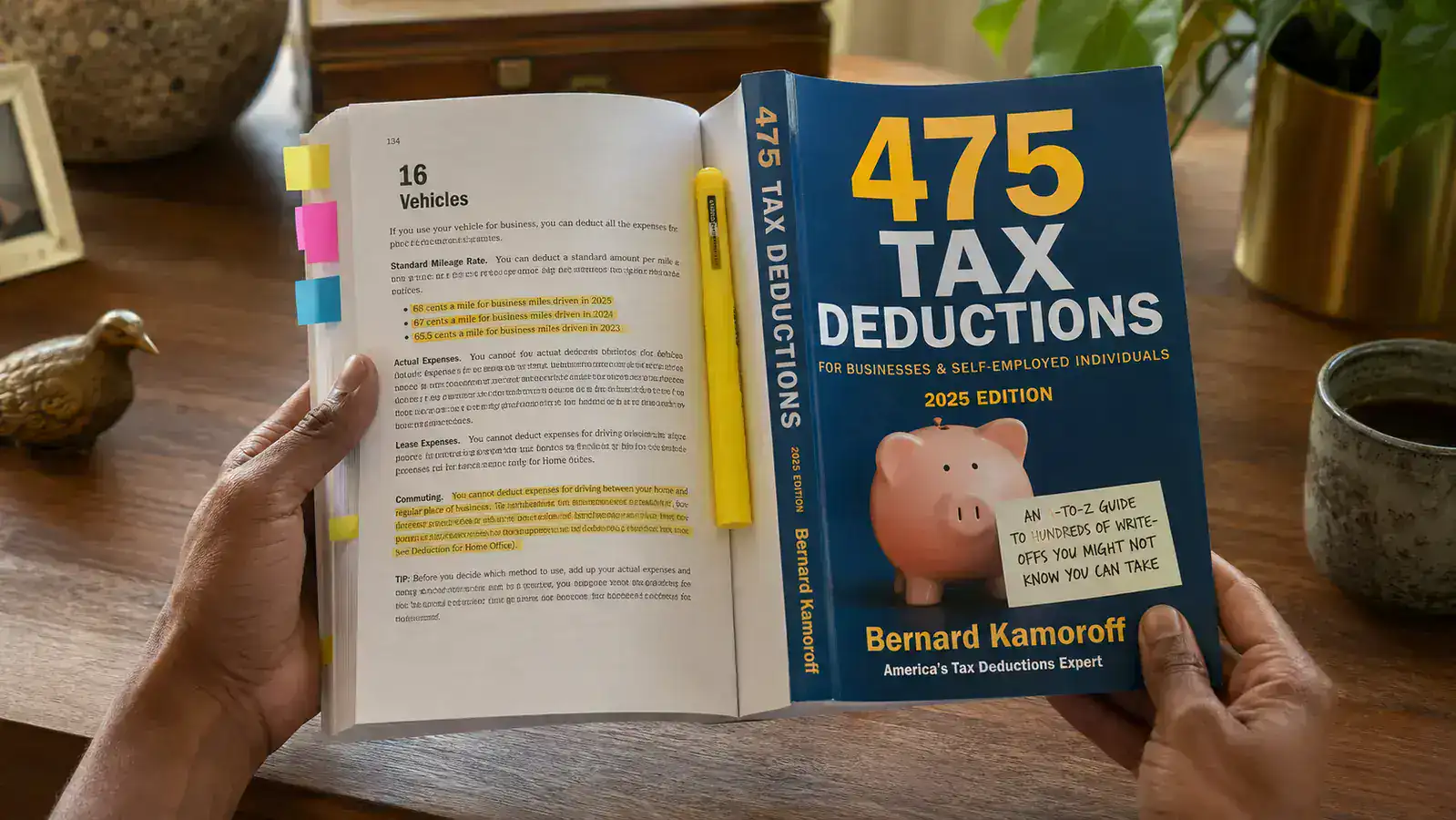
I was wrong, and I did not know I was wrong until a friend handed me a copy of Bernard Kamoroff's 475 Tax Deductions for Businesses and Self-Employed Individuals. She had been using it for two years and said it had changed the conversation she had with her own accountant. I read through the first fifty pages on a Sunday afternoon and immediately started circling things.
Three of them hit close to home right away. My home office deduction had been calculated based on a single room, but I also used a second smaller room as a photography studio for client work. I had never mentioned it because I did not think it counted as a separate deductible space. The book explained clearly how to calculate and document it. The second was my internet bill. I had been claiming a partial deduction for years, but I had no idea I could also deduct a portion of my cell phone under the same category since I used it for client calls and project management tools. The third was my professional development expenses. I had been buying courses and books all along but writing off only the ones that felt obviously work-related. Kamoroff walks through a much broader set of criteria than I had applied.
My tax preparer was not incompetent. She just could not claim what I had never told her about. That is what the book helped me understand.
I want to be careful here, because this is my experience and not a promise about yours. I am not a CPA and this is not tax advice. What changed for me was not that I found some trick or loophole. It was that I came to my next tax appointment better prepared. I had a list. I had documentation. I was able to show receipts for the studio space and explain the dual-use nature of my cell phone. My preparer accepted all three adjustments after I explained them. The result was a meaningfully lower federal bill that year than I had expected.

The book is organized alphabetically, which is one of the things I genuinely appreciate about it. You do not have to read it cover to cover. You look up something like "home office" or "professional development" or "vehicle" and you get a plain explanation of the rules, what qualifies, how to calculate it, and what you need to document. There are 475 categories covered. Some will not apply to you at all. Some will make you stop and think, the same way they made me stop and think.
I have gone back to it twice since that first read. Once in October when I started doing estimated quarterly payments and wanted to make sure I was setting aside the right amounts. Once last spring when I picked up a client that required some equipment purchases I had not made before. Both times it answered my question without me having to call anyone or pay for a consultation.
If you are self-employed and filing your own taxes, or bringing receipts to a preparer, this reference belongs on your desk.
Bernard Kamoroff's 475 Tax Deductions book has a 4.7-star rating from over 1,300 buyers, many of them freelancers and small business owners who found deductions they had missed for years. Check current availability on Amazon.
Amazon Check Today's Price on Amazon →The year after I read it, I also started a simple tracking spreadsheet. Nothing complicated. Just a tab in Google Sheets where I log business expenses by category as they happen rather than digging through twelve months of bank statements in January. The book helped me build that system because it showed me which categories matter and what documentation each one needs. That change alone probably saved me two hours at tax time and reduced the number of expenses I forgot to claim.

I still work with a tax preparer. I am not suggesting this book replaces professional help. What it did was close the knowledge gap between what I knew and what she needed to work with. She cannot claim what I do not tell her about. The book helped me figure out what to tell her.
What I'd Tell You If We Were Sitting at My Kitchen Table
If you are self-employed, a freelancer, a gig worker, or running any kind of side business alongside a regular job, I would tell you this plainly: most people in that situation are missing at least one or two deductions they legitimately qualify for. Not because anyone is cheating them, but because nobody ever sat down and walked them through what the IRS actually allows. Tax preparers can only work with what you bring to the appointment. Most of us bring an incomplete picture.
This book is not a magic answer. Your situation may be different from mine, and tax law does change, so you should always verify anything you find here with a qualified professional before you file. But as a starting point for understanding what categories of deductions exist and which ones you should be asking your preparer about, I have not found anything that beats it for the price.
I would tell you to read the sections most relevant to your work first. Bookmark the ones that raise questions. Bring those questions to your accountant or tax preparer. That is the honest way this book has helped me, and I think it is how it is most useful to most people.
Worth having before your next tax appointment, not after.
475 Tax Deductions for Businesses and Self-Employed Individuals covers deductions in plain language, organized A to Z. Helpful for freelancers, consultants, gig workers, and small business owners who want to show up to tax season better prepared.
Amazon Check Today's Price on Amazon →