

When I started paying attention to investing, I did what most people do: I opened a brokerage account, scrolled through ticker symbols, and started guessing. I bought three individual stocks based on companies I had heard of. One tanked. One went sideways for two years. One did okay. After eighteen months, I had underperformed the S&P 500 by a wide margin while spending a lot of weekends anxious about earnings reports.
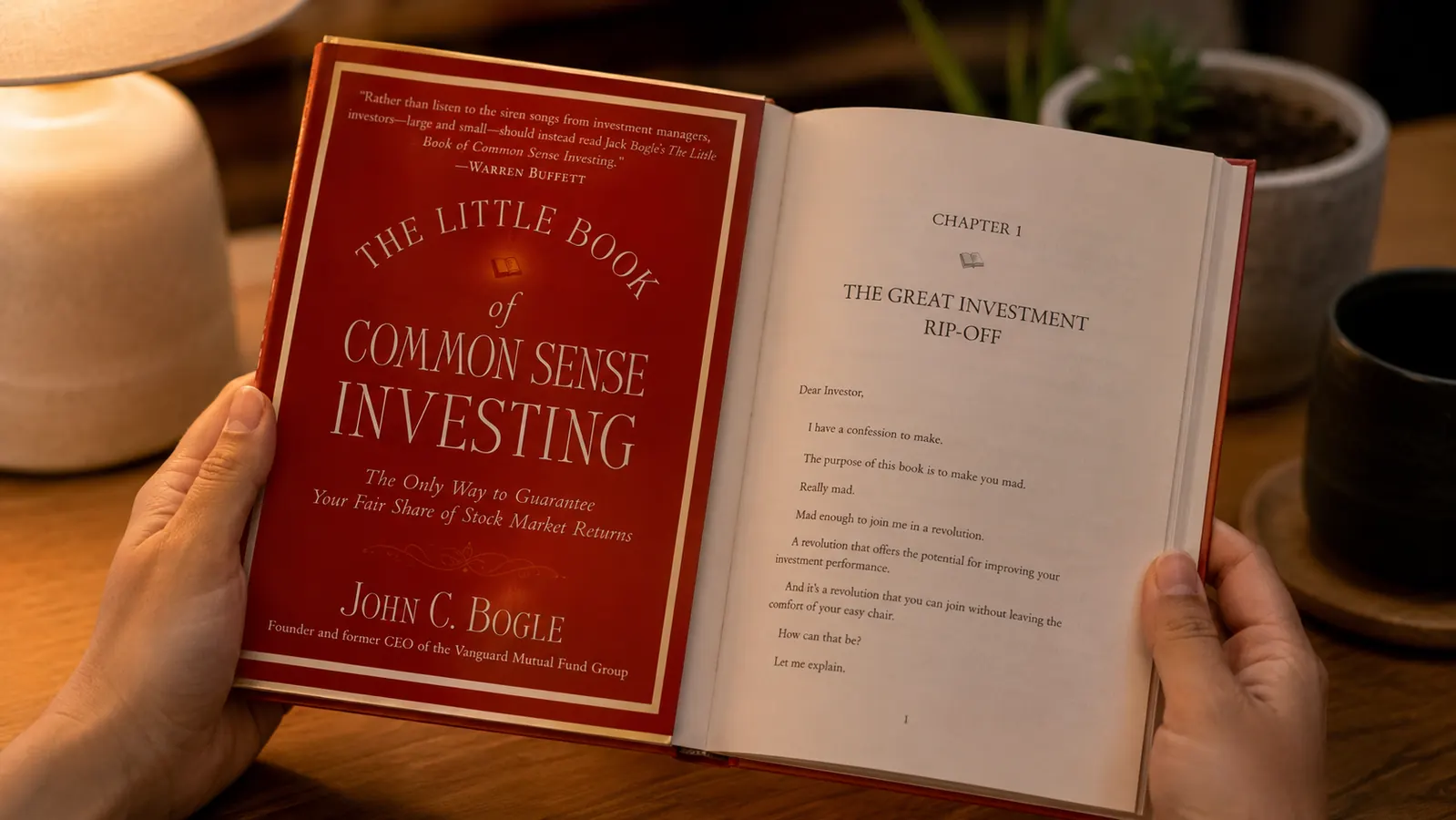
The book that changed how I thought about this was John Bogle's 'The Little Book of Common Sense Investing.' It is short, plain, and full of data. Bogle spent decades at Vanguard making the case that most investors, including professionals, do not beat the market consistently. His answer was simple: own the whole market through a low-cost index fund and stop trying to outsmart it. Below are 10 reasons that argument holds up, explained in plain English and backed by Bogle's own research in the book.
Still trying to pick the right stocks? This slim book explains why that is the harder road.
John Bogle's 'The Little Book of Common Sense Investing' has 11,461 reviews on Amazon and a 4.7-star rating. It is the foundational case for index fund investing, written by the person who invented the index fund for everyday investors.
Amazon Check Today's Price on Amazon →Most Active Stock Pickers Lose to the Market Over Time
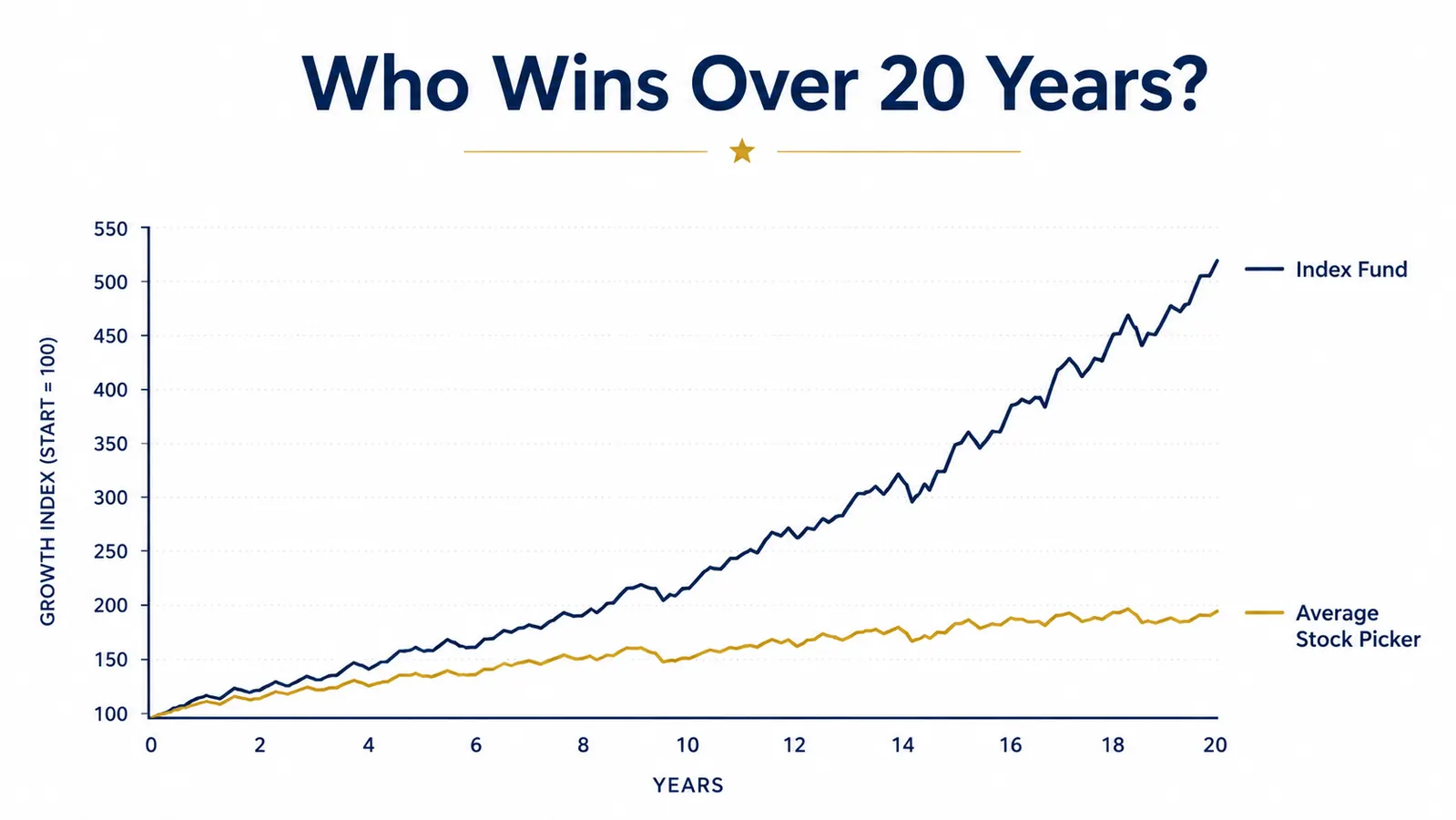
Bogle cites data showing that the majority of actively managed mutual funds underperform their benchmark index over a 10-year period. This is not a bad year here and there. It is a structural pattern. When you pick individual stocks, you are competing against professional fund managers, algorithms, and full-time analysts, and most of them still lose. The book walks through the math clearly so you can see it yourself.
Costs Eat Returns, and Index Funds Have Far Lower Costs
One of Bogle's central arguments is about the cost of investing. Actively managed funds charge management fees that can run 1% or more per year. A total stock market index fund often charges 0.03% to 0.10%. That gap compounding over 20 or 30 years is enormous. Bogle calls it the 'cost matters' hypothesis, and the numbers in the book are hard to argue with.
You Do Not Have Time to Research Stocks Properly
Picking individual stocks well requires reading earnings reports, understanding industry dynamics, monitoring news, and reassessing constantly. If you are working full time and managing a household, that is not realistic. An index fund does not ask you to do any of that. You set it up and let it run. Bogle's book is honest that this simplicity is a feature, not a consolation prize.
Diversification Is Built In Automatically
When you buy a total market index fund, you own a small piece of thousands of companies. If one company has a bad year, it barely moves the needle on your overall portfolio. When you pick individual stocks, a single bad bet can hurt your portfolio significantly. Bogle explains that broad diversification is one of the few genuinely free advantages available to ordinary investors.
Emotions Are Your Biggest Enemy, and Index Funds Help Manage Them
One of the quieter points in the book is about behavior. When you own individual stocks, you watch them daily. You feel the urge to sell when they drop and buy more when they surge. Both instincts tend to be wrong at exactly the wrong moment. Index fund investors, especially those using automatic contributions, tend to avoid these emotional traps because there is less to react to.
Historical Market Returns Are Actually Pretty Good If You Just Capture Them
Bogle points out that the U.S. stock market has historically returned around 9% to 10% per year over long periods, before inflation. The problem is that most investors do not capture those returns because they trade in and out at the wrong times and pay fees that reduce their share. An index fund investor who stays put and keeps contributing captures most of that return. That is the thesis of the whole book.
The stock market is a giant distraction from the business of investing. Bogle's point is that you do not need to win the trading game. You just need to own the game.
You Cannot Reliably Pick the Right Time to Buy or Sell
Market timing means getting out before a drop and back in before a recovery. Study after study Bogle references shows that even professionals cannot do this consistently. Missing just a handful of the best market days in a decade can reduce your total return dramatically. Index fund investing sidesteps the problem entirely by keeping you invested through the noise.

Index Funds Are Tax-Efficient in a Way Active Portfolios Usually Are Not
When a fund manager buys and sells frequently, those trades generate taxable events for you even inside a standard brokerage account. Index funds trade rarely because they simply hold what the index holds. That means fewer capital gains distributions and a lower tax drag over time. Bogle covers this in a chapter most beginners skip, but it matters a lot once your account grows.
It Is Easy Enough to Actually Start
One reason people never invest is that the options feel overwhelming. Choosing between thousands of stocks with no training is genuinely hard. Choosing a single broad-market index fund is not. You open an account, pick one fund, set up an automatic contribution, and leave it alone. Bogle's book is partly effective because it gives ordinary people a clear, repeatable action they can take today.
The Boring Strategy Is the One That Actually Works
Nothing about index fund investing makes for exciting conversation at dinner. There is no story about finding the next big stock before it ran up. That is also exactly why it works for most people. Bogle's central message, repeated throughout the book, is that the exciting investing story almost always ends in underperformance. The boring one ends in wealth. He has the data to back it up.
What I Would Skip
If you want a book that helps you pick individual stocks or time the market, this is not it. Bogle is not arguing for a nuanced blend of strategies. He is making a sharp, data-backed case that index funds are the better path for most investors, and he does not leave much room for the other side. If you are a financial professional looking for middle ground, you may find it one-sided. For everyone else, that directness is a feature. You do not need a hedge. You need a clear answer, and this book gives you one.
I read this book expecting a starting point. It turned out to be the whole map. Once you understand what Bogle is saying, a lot of the noise around investing stops making sense.
Ready to stop second-guessing and start investing the straightforward way?
John Bogle's 'The Little Book of Common Sense Investing' is the clearest case ever made for index fund investing. Rated 4.7 stars by more than 11,000 readers on Amazon. A short read that tends to change how people think about money for good.
Amazon Check Today's Price on Amazon →